Journal
Wallpaper on the Ceiling: Ideas and Installation Tips
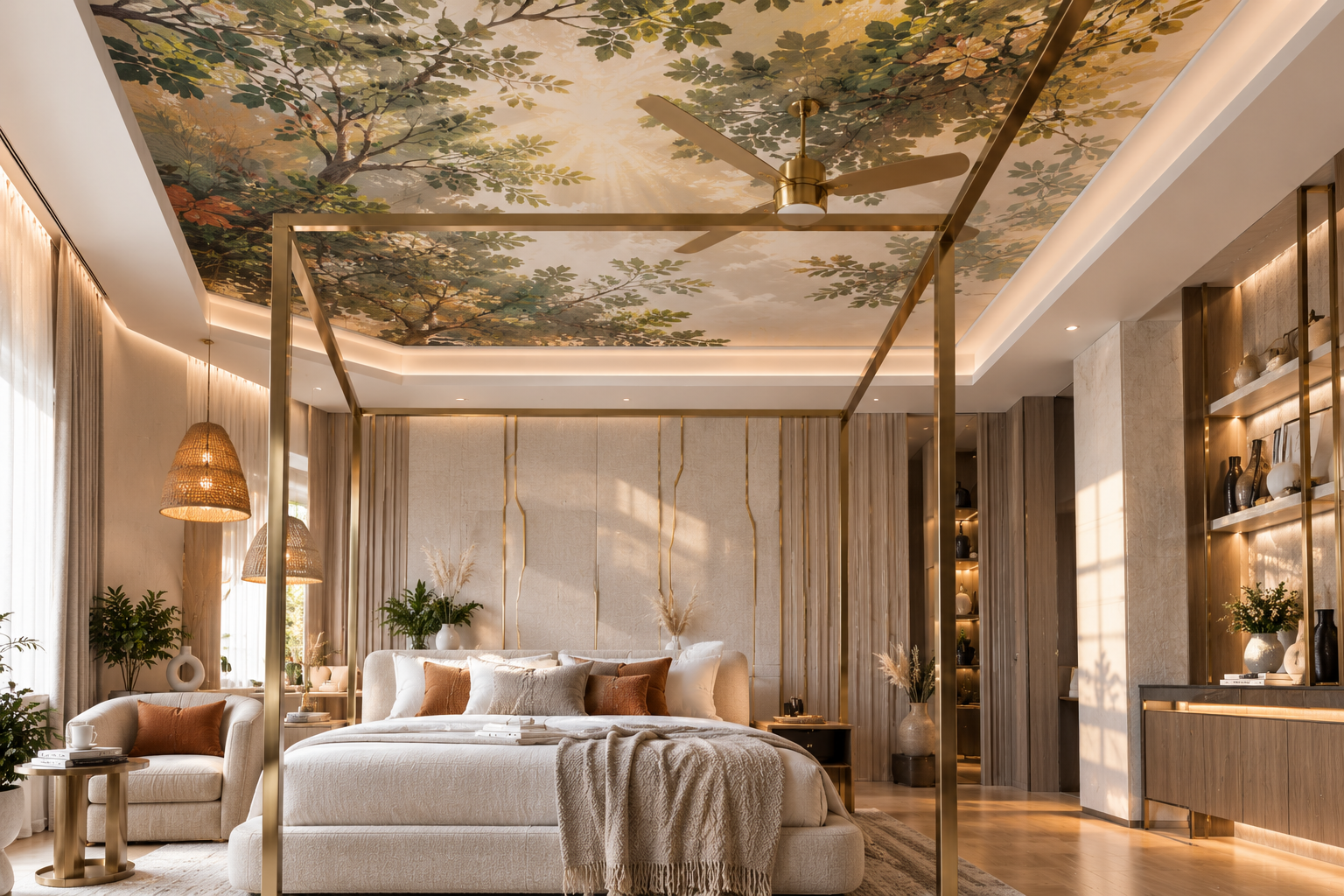
When planning a room, most people focus on wall colors, furniture, flooring, and lighting. But there is another surface with enormous design potential: the ceiling. Often called the fifth wall, the ceiling can introduce color, pattern, texture, and architectural character without taking up any additional floor space.
Wallpaper on the ceiling is a creative way to make a room feel more distinctive. A subtle botanical print can soften a bedroom, a geometric pattern can give a dining room a contemporary edge, and a custom mural can turn an ordinary ceiling into an unexpected focal point.
The key is choosing a design that works with the room's proportions, lighting, and existing finishes. In this guide, we explore ceiling wallpaper ideas, how to select the right material, where this design approach works best, and what to consider before installation.
Why Put Wallpaper on the Ceiling?
Ceiling wallpaper can change the character of a room without requiring a complete interior redesign. Instead of covering every wall with a bold pattern, you can use the ceiling to introduce a carefully controlled design feature.
Here are several reasons to consider this approach.
Create a Distinctive Focal Point
A wallpapered ceiling naturally draws the eye upward. This can be especially effective in rooms with relatively simple furniture, neutral walls, and understated architectural details.
A large-scale floral print, an elegant geometric design, or a decorative mural can create a memorable focal point while allowing the rest of the room to remain visually balanced.
Add Color Without Overwhelming the Walls
If you love expressive wallpaper but prefer to keep your walls relatively neutral, the ceiling offers another place to introduce color.
Consider a muted blue pattern in a white bedroom, a soft green botanical design in a sitting room, or a warm metallic finish in a formal dining area. These choices can add personality without requiring a bold pattern across the entire room.
Make the Room Feel More Complete
A carefully selected ceiling finish can connect elements that might otherwise feel separate. Repeating a color from the curtains, upholstery, area rug, or artwork helps create a coordinated interior.
This is particularly useful when the room already has a strong design direction but still feels unfinished.
Introduce Texture and Visual Depth
Not every ceiling needs a dramatic print. Textured, linen-inspired, and understated geometric wallpapers can add visual depth without competing with furniture or artwork.
The result can be subtle and sophisticated, particularly in interiors where material quality and thoughtful detailing matter more than strong contrasts.
7 Ceiling Wallpaper Ideas to Inspire Your Design
The best ceiling wallpaper ideas are those that complement the architecture and intended atmosphere of the room. Consider these seven approaches when planning your design.
1. Botanical Wallpaper for a Relaxed Atmosphere
Nature-inspired patterns can bring an organic quality to interior spaces. Botanical leaves, delicate branches, and flowing floral motifs work particularly well in bedrooms, reading rooms, and sitting areas.
For a balanced look, pair the ceiling design with natural wood, soft textiles, and restrained wall colors. If the pattern is intricate, keep other decorative elements relatively simple.
2. Geometric Wallpaper for Contemporary Interiors
Geometric wallpaper can introduce structure and movement to a room. Repeating lines, abstract shapes, and symmetrical motifs can complement modern furniture, clean architectural details, and contemporary lighting.
For smaller rooms, consider a pattern that remains visually comfortable when viewed from below. Large, high-contrast designs can make a stronger statement, while softer geometric repeats offer a more understated finish.
3. Textured Wallpaper for Subtle Sophistication
Textured wallpaper is an option for homeowners who want to enhance the ceiling without making it the dominant feature.
Linen-inspired finishes, understated woven effects, and subtle surface patterns can add dimension while working with a wide range of furniture styles.
Before choosing a textured product, review its installation requirements and confirm that it is suitable for the condition of the ceiling. Some materials can highlight imperfections rather than conceal them.
4. Metallic Wallpaper for a Touch of Luxury
Metallic and pearlescent details can interact with natural and artificial light, creating a changing appearance throughout the day.
These finishes may work well in dining rooms, entryways, dressing rooms, and other spaces where decorative lighting plays an important role.
Use metallic wallpaper thoughtfully. A restrained shimmer can add elegance, while an overly reflective surface may compete with chandeliers, recessed lights, and other finishes.
5. Striped Wallpaper to Emphasize Architectural Lines
Stripes can introduce direction and rhythm to a ceiling. Depending on the design and room proportions, they can create a tailored, traditional, or contemporary look.
Plan the orientation before ordering the wallpaper. The direction of the stripes should work with the room's dimensions, the placement of windows, and the main sightlines.
6. Custom Ceiling Murals for an Artistic Statement
A custom mural can transform the ceiling into an artwork. Abstract compositions, atmospheric landscapes, and decorative illustrations offer possibilities beyond conventional repeating patterns.
Murals are especially worth considering when the ceiling is a central part of the room's visual experience. However, the image, scale, panel layout, and installation method should be planned together to achieve a cohesive result.
7. Coordinated Wallpaper on Walls and Ceiling
For a more immersive interior, consider extending a wallpaper design from the walls onto the ceiling.
This approach can create a continuous visual environment in a bedroom, a small powder room, or a thoughtfully designed sitting area. It may also work with complementary patterns rather than an exact match, provided the colors and scales are balanced.
If you are exploring ways to combine multiple surfaces, our guide to accent wall ideas with wallpaper, panels, and murals offers additional inspiration.
How to Choose the Right Wallpaper for Your Ceiling
A design that looks beautiful on a sample board may appear different when installed overhead. Before making a selection, consider the following factors.
Consider Ceiling Height and Room Proportions
Room proportions influence how a wallpapered ceiling feels.
- Lower ceilings: Lighter colors, restrained patterns, and visually open designs may help preserve a sense of space.
- Higher ceilings: Larger motifs, richer colors, and more expressive patterns may feel appropriately scaled.
- Small rooms: A well-chosen ceiling pattern can add personality, but excessive contrast or competing designs may make the space feel busy.
- Large rooms: Repeating patterns or coordinated finishes can help connect the ceiling to the rest of the interior.
These are starting points rather than strict rules. The best choice depends on the room's natural light, furniture, wall colors, and overall design.
Match the Pattern to the Room's Style
A ceiling should complement the interior rather than feel like an unrelated decorative feature.
For a traditional room, consider botanical motifs, classic repeats, or elegant ornamental designs. Contemporary spaces may benefit from abstract graphics, understated geometry, or textured finishes. Transitional interiors often work well with restrained patterns that combine traditional detail and modern simplicity.
The objective is not necessarily to match every finish. It is to establish a visual relationship between the ceiling, walls, furnishings, and architectural details.
Evaluate the Wallpaper Material
Different wallpaper materials have different appearances, handling characteristics, and installation requirements. Before ordering, review the product specifications and the manufacturer's installation instructions.
Consider the following questions:
- Is the product appropriate for ceiling installation?
- Which adhesive or application method is required?
- Does the surface need a particular primer?
- How should the material be cleaned or maintained?
- Is the product suitable for the room's environmental conditions?
Do not assume that every wallpaper is suitable for every ceiling. Material selection should account for the surface, intended use, and installation conditions.
Test Samples Under Different Lighting Conditions
Lighting can significantly change how colors and patterns appear. A wallpaper that looks soft in daylight may seem more dramatic under warm evening lighting.
If samples are available, examine them at different times of day and alongside the room's paint colors, flooring, furniture, and lighting fixtures.
For large patterns, consider the motif's scale from the viewing distance below. This can help you decide whether the design feels balanced once installed overhead.
Which Rooms Work Best for Ceiling Wallpaper?
Ceiling wallpaper can work in many areas of a home, but each room presents different design considerations.
Bedrooms
Bedrooms are well suited to softer patterns, muted colors, and subtle textures. A wallpapered ceiling above the bed can create a defined visual zone without adding more objects or artwork to the walls.
Botanical designs, delicate geometric motifs, and understated textured finishes are all worth exploring.
Dining Rooms
A dining room ceiling can support a more expressive design, particularly when the table and lighting already establish a natural focal point.
Consider a pattern that complements the dining furniture and fixture finish. The design should enhance the atmosphere without competing with table settings, artwork, or other decorative elements.
Living Rooms
In a living room, the ceiling wallpaper should work with the main seating arrangement, windows, and architectural features.
A subtle texture can provide cohesion in a neutral interior, while a bolder design can help define the room's character. In open-plan spaces, consider how the ceiling pattern relates to adjacent areas.
Home Offices
A home office can benefit from a ceiling design that adds interest without creating excessive visual distraction.
Muted geometric patterns, soft textures, and restrained colors can complement built-in storage, desks, shelving, and task lighting.
Powder Rooms and Small Bathrooms
Small powder rooms are often suitable places to experiment with decorative finishes because the design can create a strong impression in a compact area.
However, moisture and ventilation must be considered carefully. Use wallpaper only when the selected product and installation system are appropriate for the room's conditions. A product suitable for a dry powder room may not be suitable for a bathroom with frequent condensation.
For more information about material performance in moisture-prone spaces, see our guide to wallpaper in bathrooms and kitchens.
How to Prepare for Ceiling Wallpaper Installation
Installing wallpaper overhead requires careful planning. The weight of the material, surface preparation, pattern alignment, and access to the ceiling can make the process more demanding than a typical wall installation.
1. Inspect the Ceiling Surface
The ceiling should be clean, dry, stable, and appropriately smooth for the selected wallpaper.
Address loose paint, dust, cracks, holes, and other surface problems before installation. Water stains or signs of moisture should be investigated and resolved rather than simply covered with wallpaper.
Follow the wallpaper manufacturer's requirements for priming and surface preparation.
2. Measure Carefully and Plan the Layout
Measure the ceiling dimensions and identify any unusual angles, recesses, beams, vents, or light fixtures.
For patterned wallpaper, determine where the design should begin and how the pattern will repeat across the surface. Centering a motif can create a more balanced appearance, depending on the design and room layout.
Allow for pattern repeats and cutting waste when calculating the amount of wallpaper required.
Our guide to calculating how much wallpaper you need can help you understand the role of pattern repeat in material planning.
3. Confirm the Correct Adhesive and Application Method
Wallpaper products do not all use the same installation process. Some require adhesive on the wallpaper, while others are designed for adhesive to be applied to the surface.
Use the method specified by the manufacturer. Choosing an unsuitable adhesive or skipping required preparation can affect adhesion and the finished appearance.
4. Plan Around Lighting and Fixtures
Identify the positions of light fixtures, ceiling fans, vents, and other fittings before installation.
The layout should account for these features so the wallpaper pattern remains visually balanced. Electrical fixtures should be handled safely, with appropriate isolation and qualified assistance where required.
5. Consider Professional Installation
Ceiling wallpaper installation involves working overhead while managing long wallpaper lengths and aligning seams. Complex patterns, large ceilings, murals, and difficult room layouts can require particular precision.
An experienced installer can help assess the surface, plan the layout, match patterns, and work around architectural features. For valuable materials or intricate designs, professional installation may be a worthwhile part of the project.
Common Ceiling Wallpaper Mistakes to Avoid
A successful design depends on more than selecting an attractive pattern. Avoid these common problems when planning your project.
- Choosing a pattern without considering scale. A small repeat may look different across a large ceiling, while a very bold pattern may dominate a compact room. Review the design in relation to the room's dimensions.
- Ignoring the lighting plan. Ceiling wallpaper and lighting should be considered together. Strong reflections, shadows, and color temperature can influence the final appearance.
- Skipping surface preparation. Uneven, damp, or unstable surfaces can compromise the finish. Resolve surface problems before installation.
- Ordering too little material. Pattern repeats, trimming, and complex layouts can increase material requirements. Calculate the quantity using the specific product's dimensions and repeat information.
- Combining too many competing patterns. A patterned ceiling can work with patterned walls and textiles, but the overall composition needs a clear visual hierarchy. Varying the scale and intensity of patterns can help create balance.
- Assuming every wallpaper is suitable for every room. Check product specifications for the intended application, environmental conditions, and installation method before ordering.
Frequently Asked Questions About Wallpaper on the Ceiling
Is wallpaper on the ceiling a good idea?
Yes. Ceiling wallpaper can introduce color, texture, and a distinctive focal point without requiring the entire room to be covered in a bold pattern. The result depends on choosing a suitable design and preparing the surface correctly.
Does ceiling wallpaper make a room look smaller?
Not necessarily. The effect depends on the color, pattern, ceiling height, lighting, and surrounding finishes. Lighter or more restrained designs may preserve an open feeling, while darker or more dramatic patterns can create a more intimate atmosphere.
What type of wallpaper is best for ceilings?
There is no single best option for every ceiling. Choose a product that is appropriate for the surface and installation conditions, and consider its weight, pattern scale, adhesive requirements, and maintenance instructions.
Can wallpaper be installed on a textured ceiling?
It depends on the texture, its condition, and the wallpaper manufacturer's requirements. Significant texture can prevent a smooth finish or affect adhesion. The surface may need professional assessment and preparation before installation.
Is ceiling wallpaper difficult to install?
It can be more challenging than wallpapering a wall because the material must be supported overhead while the installer maintains alignment and smooths the surface. Complex patterns and large areas may benefit from professional installation.
Can I use wallpaper on a bathroom ceiling?
Only when the selected product and installation system are suitable for the room's moisture conditions. Ventilation, condensation, surface condition, and manufacturer guidance all matter. Do not use ordinary wallpaper on a ceiling simply because it looks suitable.
How much extra wallpaper should I order?
The amount depends on the ceiling dimensions, roll size, pattern repeat, layout, and cutting requirements. Calculate the quantity for the specific design rather than relying on floor area alone. A larger pattern repeat can increase waste.
Give Your Ceiling a More Thoughtful Design
The ceiling offers an opportunity to add a finishing detail that makes an interior feel more personal and considered. From understated textures and botanical prints to geometric patterns and custom murals, the right wallpaper can complement the room's architecture and bring its design elements together.
Start by considering the atmosphere you want to create, then evaluate the ceiling's proportions, lighting, surface condition, and material requirements. Reviewing samples in the actual space can also help you understand how a pattern will look from below.
At Morek Interiors, you can explore wallcovering and decorative surface options for residential and commercial design projects. Browse our collections, request samples, or contact our team to discuss the right direction for your space.
Ready to explore your options? Visit Morek Interiors to discover wallcoverings and design possibilities for your next project.